Start With the Print Method, Then Match the Fabric
The first step is to decide how the bag will be decorated. For sublimation, a high polyester content is the main requirement because the ink bonds properly to the fibres. If the fabric has too much cotton, the print can look muted or uneven, especially after washing or repeated handling. For bags that will carry logos, school art, or promo designs, a smooth polyester face is usually the safest choice.
For heat transfer and vinyl, you have a bit more flexibility, but the fabric still needs to be stable and flat enough to take heat without warping. A good blank bag should sit neatly under the press, with minimal texture and no thick seams where the artwork will be placed. In our Durban climate, coastal humidity can also affect storage, so keeping stock dry and wrapped helps prevent creasing and moisture marks before printing.
- Choose high polyester content for sublimation work.
- Check that the print area is flat and even.
- Avoid heavy texture if the design has fine detail.
- Store blanks in a dry room, not against damp walls.
Check the Fabric Weight Before You Buy in Bulk
Bag fabric weight tells you a lot about how the blank will perform. Lightweight fabric is useful for giveaways and event packs, but it may not keep its shape if customers carry books, brochures or groceries. Heavier fabric gives better structure, although it can cost a bit more and may need stronger stitching. For resellers and promo companies in Pinetown, Westville or Umhlanga, it helps to test one sample before committing to a full run.
A useful habit is to compare the weight with the purpose of the bag. A small gym pouch can work well in a lighter cloth, while a tote for retail use usually needs a denser weave and stronger handles. If the bag will be packed with samples, bottles or stationery, ask whether the seams are reinforced at the base and handle joins. That small detail can make a big difference once the bags are in circulation.
- Lightweight bags suit giveaways and short-term use.
- Medium to heavy fabric suits retail, school and event use.
- Test one bag with real contents before placing a bulk order.
- Ask about base reinforcement and handle stitching.
Look at Construction Details That Affect Print Quality
Two bags can look similar on a shelf, but behave very differently under a press. The stitching line, seam placement and lining all affect where a design can sit. If the bag has bulky side seams, zips or piping near the artwork area, your print may press unevenly. Flat-front bags are easier for customisation and usually give a cleaner result for logos and promotional messages.
Construction also matters for long-term use. Double stitching at stress points, neat hems and strong handle attachment all help the bag survive daily wear. If you are supplying customers from Amanzimtoti to Phoenix, remember that bags may be used in shopping trips, office runs or school events, so poor construction can lead to returns. It is better to reject a weak blank than have it fail after a week.
- Prefer flat-front panels for larger prints.
- Avoid heavy seams through the design area.
- Check handle joins and bottom corners carefully.
- Look for neat stitching and even seam lines.
Choose the Right Bag Style for the Job
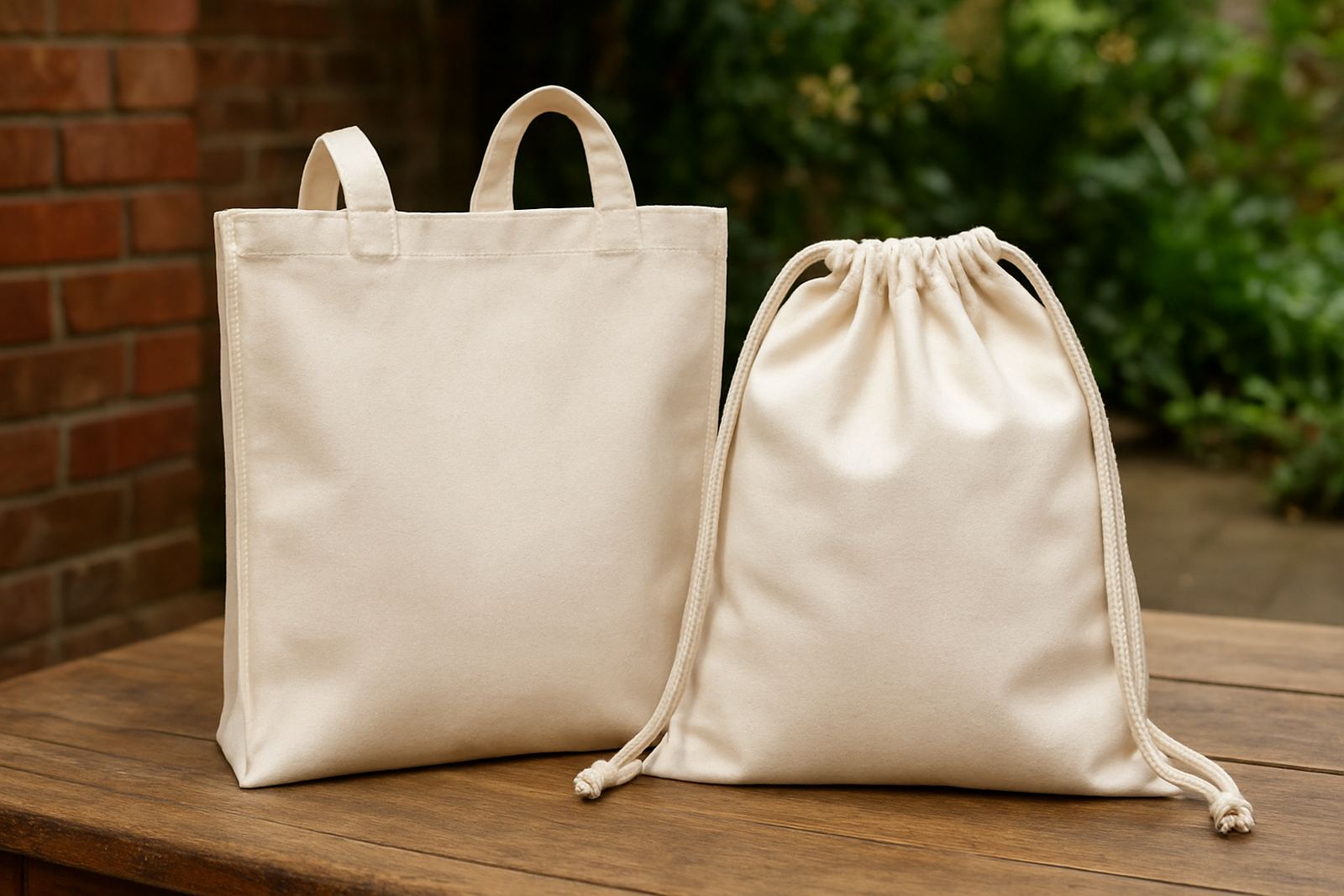
Different styles suit different customer needs, and the fabric should match the use case. Tote bags are popular for retail packs, exhibitions and craft sales because they are simple to print and easy to fold. Drawstring bags work well for sports kits, children’s events and conference packs. Zipped pouches are useful for stationery, cosmetics and small accessories, especially when you want a more premium feel.
If you supply resellers, think about what they will need to move quickly. A mixed order with tote bags, drawstring bags and small pouches gives better flexibility than a single style only. For businesses in Hillcrest or Pinetown handling seasonal promotions, it also helps to keep a few neutral colours on hand, because white and light shades usually give the sharpest sublimation results. Colour choice should always be tied to the print method, not just the look of the bag.
- Totes suit shopping, events and branded giveaways.
- Drawstring bags suit sports, school and conference use.
- Zipped pouches suit smaller items and premium bundles.
- Keep popular sizes ready for repeat orders.
Use a Simple Inspection Checklist Before Printing
Before you start printing, inspect every bag for shape, size consistency and finishing. Small faults are easy to miss in bulk, but they show up immediately once the print is applied. A twisted handle, uneven panel or loose thread can throw off alignment and waste time. This is especially important when you are packing event orders or preparing reseller restocks with tight deadlines.
A quick check also helps with returns control. If you receive a batch in the warehouse, inspect them before they are packed away. That saves time later and keeps your stock consistent. In busy periods, like year end events or back-to-school season, a simple checklist prevents avoidable delays and keeps orders moving out of Durban on schedule.
- Check that all bags are the same size.
- Look for loose threads, stains or marks.
- Test the handles and seams for strength.
- Confirm the print area is clean and flat.
Plan Stock Around Seasons, Events and Transport
Blank bags are often ordered in waves, so planning stock properly can save both time and Rand. Event season, school campaigns and holiday gifting can all affect demand. A good seasonal plan includes sample packs, size breakdown packs and enough safety stock for repeat clients. If you serve customers nationwide, from Durban to Gauteng or the Western Cape, you also need packaging that protects the bags in transit without adding too much freight cost.
Transport conditions matter too. Bags packed too tightly can crease, while loose packs can shift and scuff. For coastal branches like Amanzimtoti and Umhlanga, moisture protection is worth the effort. For inland dispatch, dust and compression are usually the bigger issue. Keep your most popular styles ready for collection scheduling, then use dispatch planning to balance stock between branches and courier orders.
- Keep sample packs ready for new buyers.
- Hold extra stock before school and year end peaks.
- Protect bags from moisture, dust and compression.
- Use size breakdowns to speed up picking and packing.
Final Buying Checklist for Blank Bags
When you are comparing blank bags, use a practical checklist rather than guessing from photos alone. The right fabric should match the decoration method, the target customer and the way the bag will be used. A bag for promo giveaways in Westville is not the same as a bag for retail resale in Phoenix or a conference pack going nationwide.
If you want consistent results, focus on repeatable details: fibre content, seam finish, handle strength, panel shape and packing condition. That is the difference between a bag that looks good once and one that keeps performing after repeated use. For bulk buyers, a stable supply and clean quality control are worth more than chasing the lowest price every time.
- Is the fabric suitable for your print method?
- Does the bag hold its shape when filled?
- Are the seams neat and reinforced?
- Will the style suit your customer’s daily use?