
Why white blanks need stricter handling than coloured stock
Blank white garments are unforgiving. A faint grease mark, a dusty fold line, or a thumbprint near the collar can show through a light print or become visible after pressing, especially on polyester when heat brings out every little blemish. In a busy workroom, the trick is not to treat white stock as fragile, but to handle it with a bit more discipline.
For crafters, small brands, and promo teams, the cost of a marked shirt is not just the garment. It is the time lost sorting, the print run delayed, and the awkwardness of a customer opening a pack and finding a stain before the design is even applied. In coastal areas like Durban and Amanzimtoti, humidity can also make dust and packaging residue cling to fabric more easily, so storage habits matter more than people think.
Set up a clean receiving and unpacking routine
Most contamination happens before a garment ever reaches the press. Boxes are opened on a worktop, plastic bags are torn with tools, and items are stacked on whatever surface is closest. A simple receiving routine prevents that.
- Open cartons away from food, drinks, and oily tools.
- Wash or sanitise hands before handling white garments.
- Use clean tables with no adhesive residue, ink, or loose dust.
- Remove outer packaging carefully so the garment does not brush against dirty tape or box edges.
- Check items as they are unpacked, not after they are piled up.
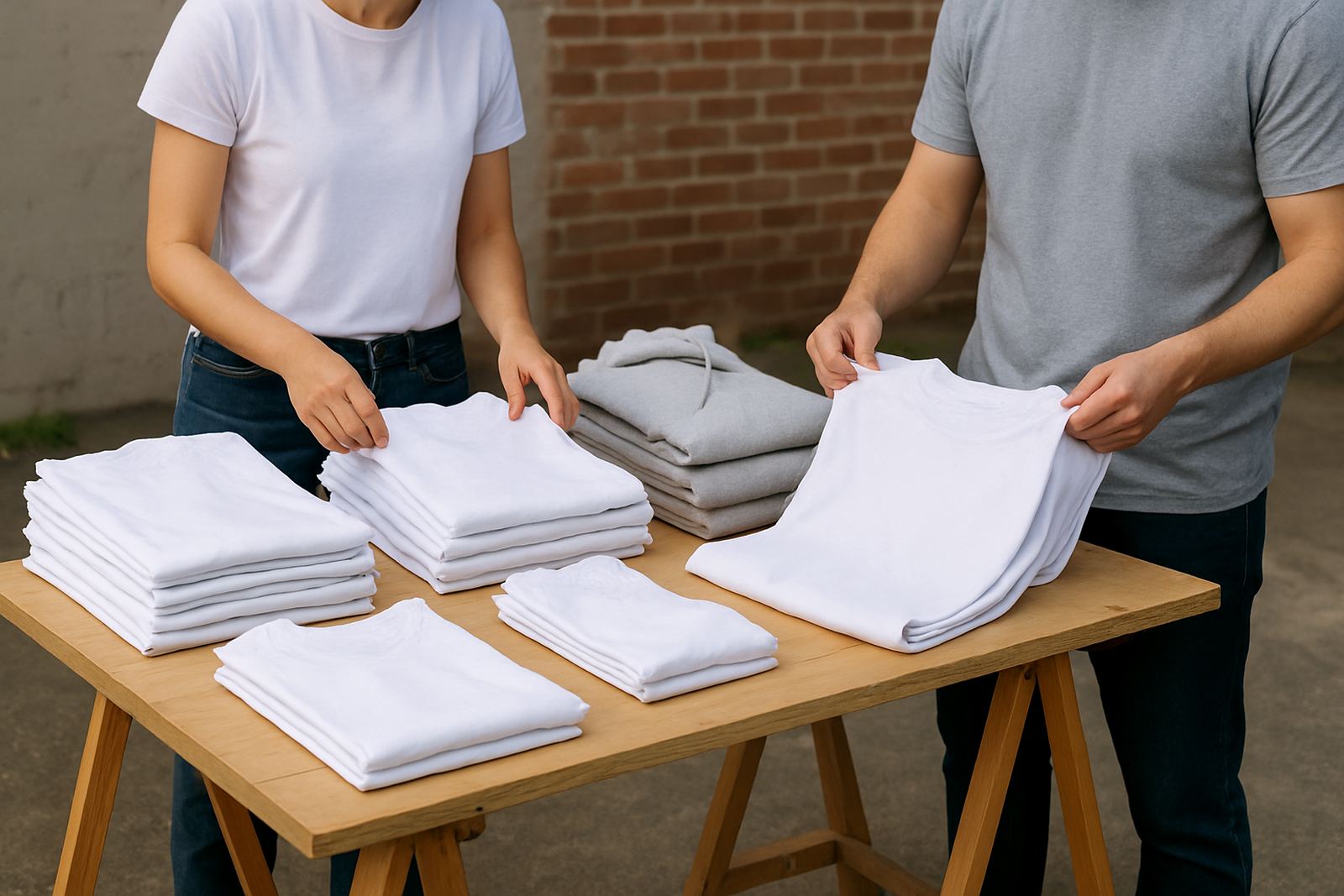
At a Pinetown operation handling bulk restocks and event kits, this kind of routine makes a real difference. One person opens and counts, another checks for marks, and a third repacks sizes into neat bundles. It sounds simple, but it keeps problems from moving deeper into the order.
Storage habits that keep stock looking fresh
Once white blanks are in the building, they should stay protected from dust, moisture, and handling marks. A sealed carton is fine for transport, but not for long-term storage if it is being opened and closed every day. In a warehouse, stock should be kept off the floor, away from open windows, and clear of printing chemicals or cleaning fluids.
Moisture is a bigger issue than many people expect. In warm coastal weather, plastic packaging can trap damp air and leave a musty smell or light patching on fabric folds. That can become a problem when garments are packed too tightly for too long.
- Store white garments in closed, dry areas with good airflow.
- Keep cartons on racking or pallets, never directly on concrete.
- Do not stack heavy boxes on top of soft folded apparel.
- Rotate older stock first so items do not sit for months.
- Avoid storing near windows where sunlight can yellow packaging over time.
For shops in Hillcrest or Westville, where space may be limited, even a small storeroom can work well if it is kept tidy and the stock is moved regularly. Clean storage beats fancy storage every time.
How to sort, count, and fold without marking the fabric
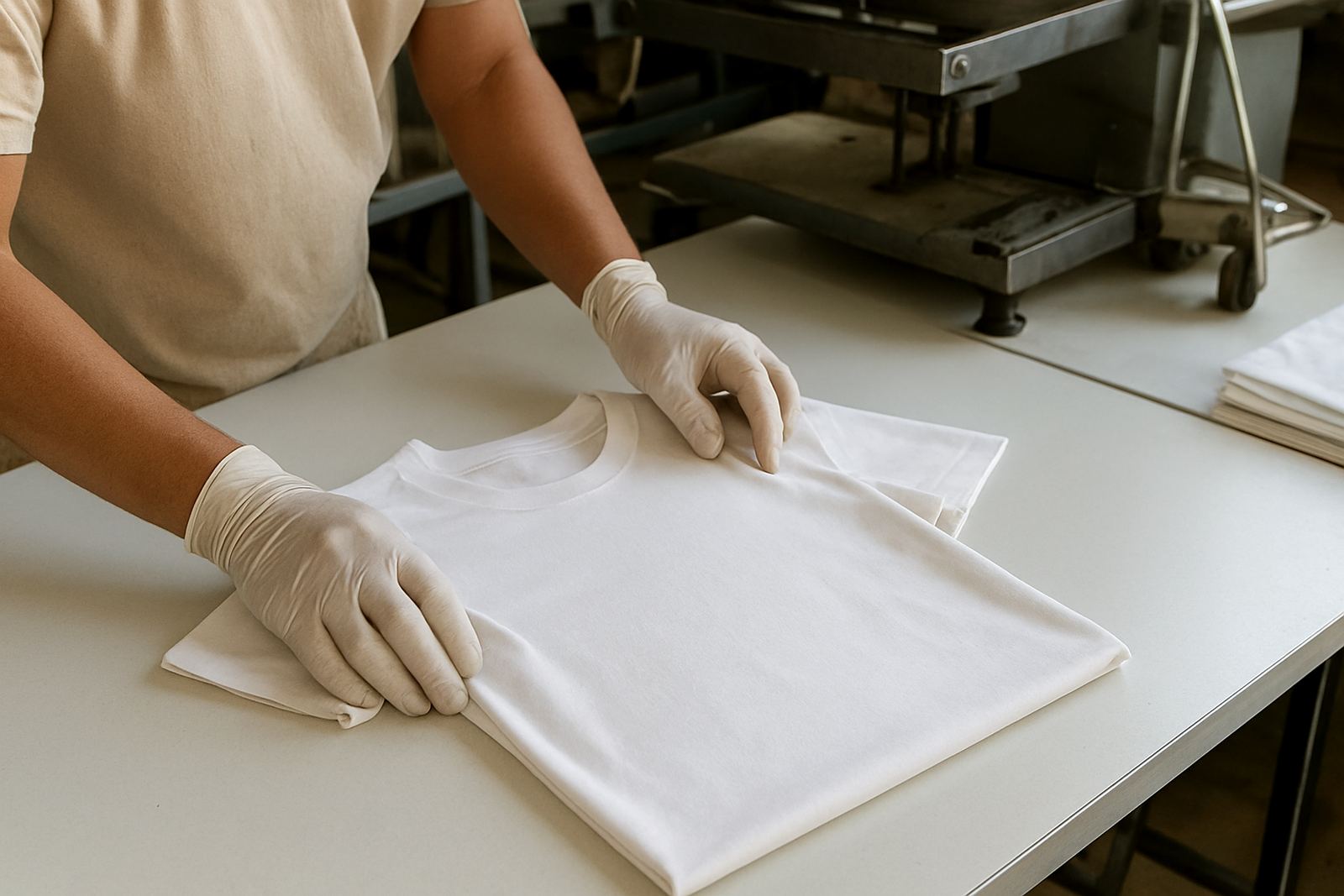
Hands leave marks, but so do rough counting methods. White garments should be sorted on a clean surface using dry hands or disposable gloves if needed. Never drag items across the table. Lift, fold, and stack with care. If a size breakdown pack is being prepared, keep each size in a separate section so shirts are not constantly rehandled.
Show staff exactly what a mark looks like before they start checking garments. A little dust can brush off, but a transfer of grease, a water spot, or a dark fibre lodged in the fabric weave may stay visible after pressing. The earlier it is found, the better.
- Count garments once at unpacking and again at packing.
- Keep light and dark fabrics apart so fibres do not transfer.
- Fold on clean paper or a wiped surface, not bare wood with residue.
- Separate damaged, marked, or returned items immediately.
In a busy week before a school sports day or corporate activation, this is where pressure builds. Careful folding and clear size labelling saves time later when the order has to move fast, even if load-shedding or a late courier collection throws the day off.
Packing for dispatch without adding new marks
Many white garments leave the supplier spotless and arrive marked because of packing. Tape edges, dirty staplers, and overstuffed courier bags can all leave lines or scuffs. If orders are being kitted for nationwide dispatch, the packing area should be treated like a clean zone.
Use fresh cartons or clean mailing bags, and make sure any inserts, size cards, or order slips are dry and free of ink smudges. Heavier items should not crush lighter garments. If a customer has ordered sample packs, promotional bundles, or reseller restocks, pack each category so the garments do not rub against each other in transit.
- Seal cartons neatly without excess tape over the fabric area.
- Keep packing tape and labels away from open garments.
- Use correct carton sizes so stock does not shift around.
- Mark boxes clearly to avoid opening and repacking later.
For dispatches heading to Phoenix, Umhlanga, Amanzimtoti, or further inland, neat packing reduces returns and saves the next person from sorting a damaged order on arrival.
What to do when a garment is marked before printing
No operation is perfect. A garment may arrive with a tiny mark from factory handling or get touched during counting. The important thing is to catch it before printing starts. Once a sublimation transfer is applied, any hidden mark can become harder to fix.
Set aside a quick inspection step before every run. Hold garments up to the light, inspect cuffs and collars, and check folded areas where pressure marks often appear. If an item is not suitable, remove it from the batch at once and log it for returns checking or internal adjustment.
A clean rejection process protects both the printer and the customer. It also helps stock planning because you can see whether marks are coming from transit, storage, or handling. That is useful when reviewing seasonal stock planning or preparing for a larger promo order. Small note, good records save a lot of frustration later on.
A simple Pinetown habit that works across the country
One practical example from a Durban warehouse is to finish each day with a five minute white stock reset. Garments waiting for printing are re-stacked, the table is wiped, loose packaging is removed, and open cartons are closed. That one habit keeps dust down, stops mix ups, and makes the next morning easier.
It is not complicated, but it works whether the order is for a local school event in Westville or a reseller restock heading nationwide. White blanks need consistency, not fuss. With the right handling, they stay clean long enough to do their job properly at the press.
For businesses that need bulk order picking, sample pack assembly, collection scheduling, or nationwide dispatch from Pinetown, a clean workflow is part of the service, not an afterthought.