

What online sellers need from a blank range
If you sell on social media, take WhatsApp orders or list on marketplaces, your stock has to do more than look good on a hanger. It needs to take print properly, keep its shape after packing and washing, and stay consistent across every reorder. That is why polyester blanks are such a practical choice for online sellers building a repeatable range.
In Durban and the wider KZN market, sellers often start with a small set of t-shirts, hoodies and a few add-ons, then test what moves fastest. The right blank range helps you launch quickly without tying up too much cash in one style or colour. For coastal areas like Umhlanga, Amanzimtoti and Phoenix, fabric choice matters too because humidity can affect storage and finishing if stock is left packed too tightly.
- Choose garments that hold bright transfers and full-colour prints well
- Keep to a small colour palette at first, usually white, black and one or two extras
- Offer a full size run so you do not lose sales on common sizes
- Use blanks that are easy to re-order in the same cut and finish
Typical equipment set for a small seller
Most online sellers do not need a full factory setup to get going. A simple print-and-pack operation can start with a heat press or other transfer equipment, a basic computer for artwork, trimming tools, packaging materials and storage shelving. If you are doing fulfilment from a home unit, a clean packing area and a reliable scale are just as important as the printing gear.
If you outsource the printing and only hold stock, your focus shifts to stock control, size breakdowns and prompt dispatch. That works well for sellers in Pinetown, Westville and Hillcrest who want to keep overheads lower while still turning orders quickly. During load-shedding, having a packing routine that does not depend on one machine all day can save a lot of stress.
- Heat press or transfer setup
- Computer or laptop for artwork and orders
- Basic cutter, ruler and trimming tools
- Packaging bags, labels and tape
- Scales for accurate courier pricing
How to plan a range that actually sells
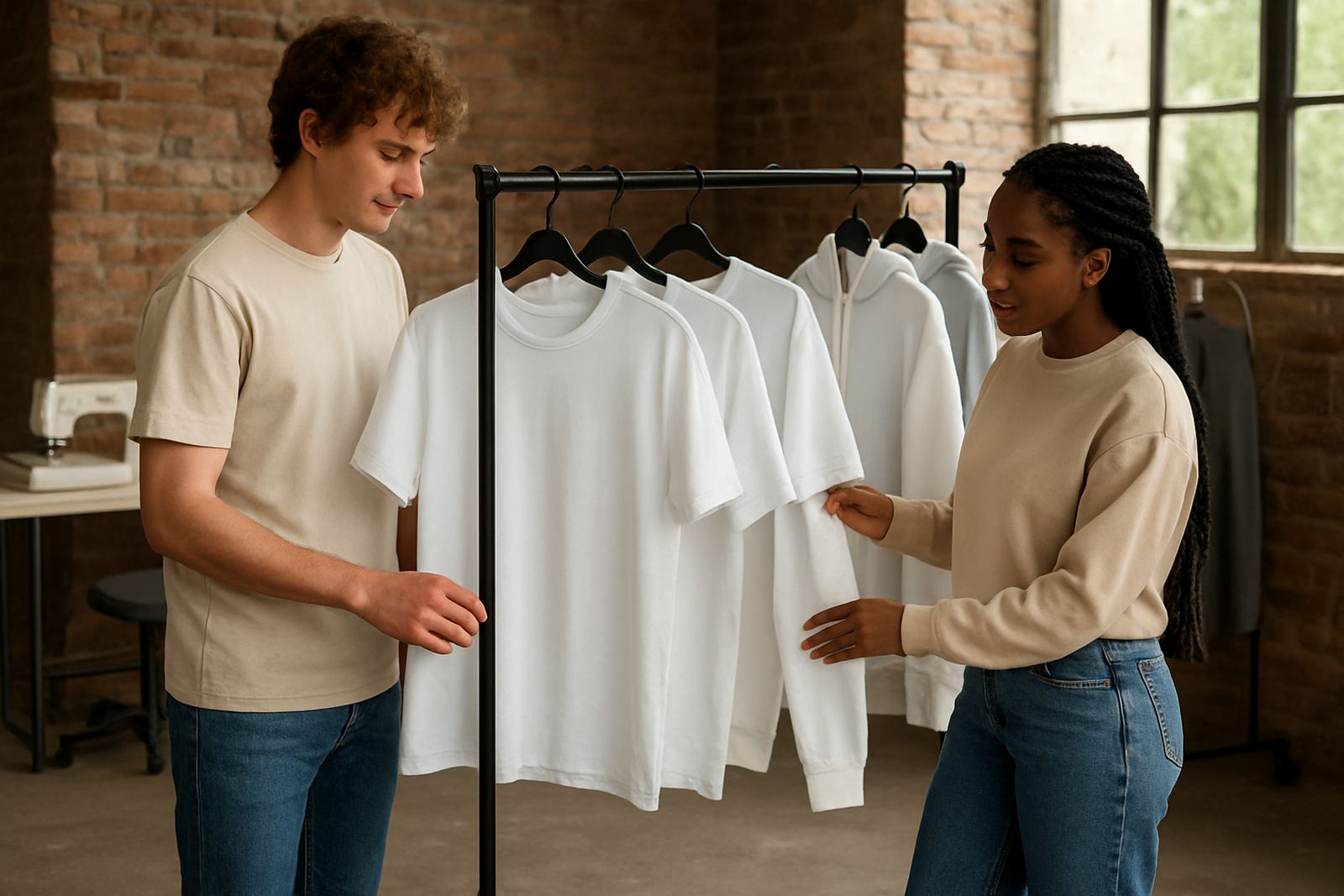
The best online ranges are easy to understand. A customer should know what they are buying within a few seconds, especially on a phone screen. Keep your first range tight, with one or two hero garments and a couple of accessories you can photograph well. For example, a white performance tee, a black hoodie and a printed cap can carry a small launch without making your shop look thin.
Planning also means sizing properly. Many sellers lose money because they stock too many small sizes and not enough medium to extra-large. Use sales history, even if it is just your first month of enquiries, to guide your next order. In South Africa, size breakdowns matter because one missed size can mean a cancelled order and a refund you did not budget for.
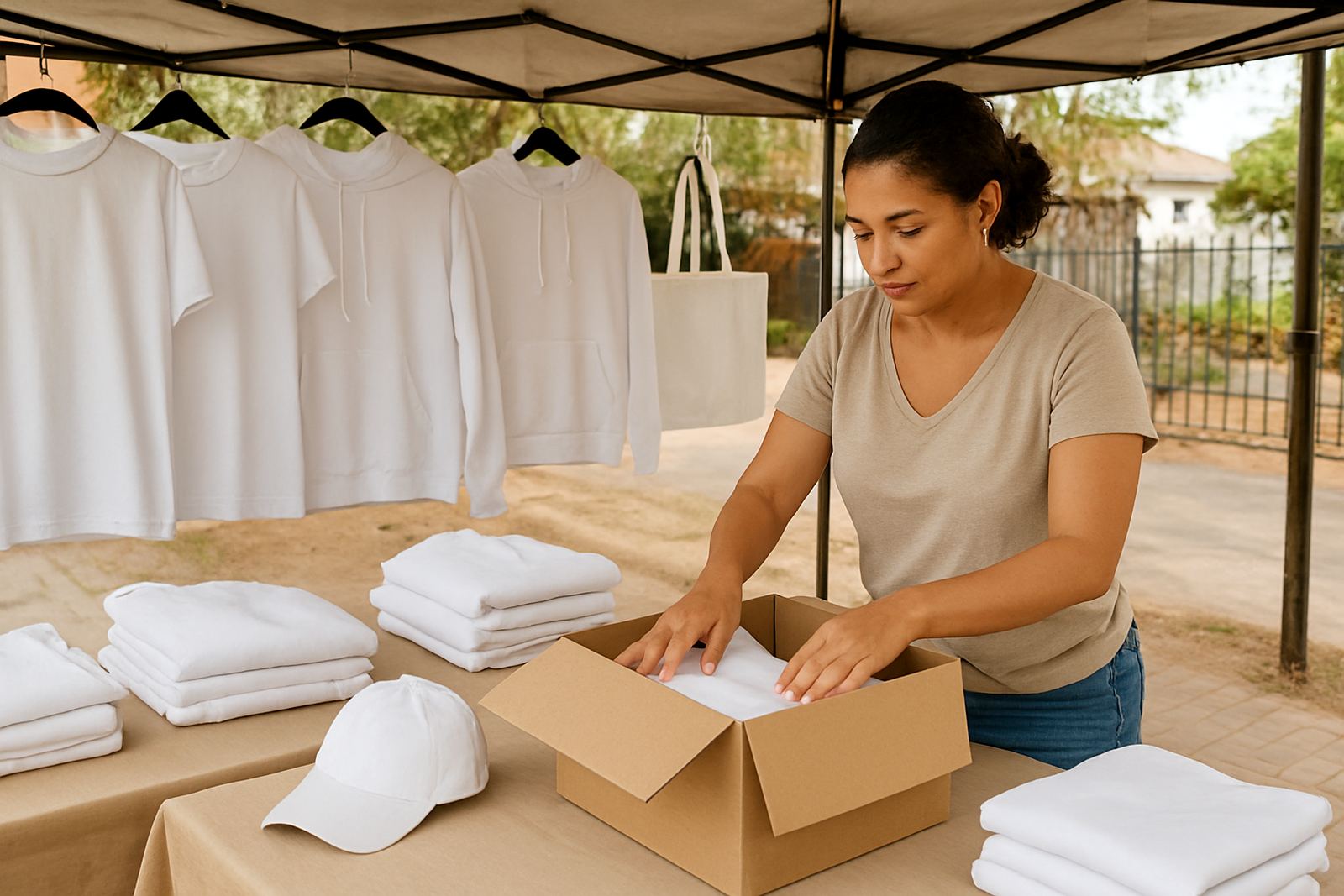
For market readiness, think about the full order journey: how the product will be packed, how it will ship to Durban, Johannesburg or George, and how returns will be checked if the size is wrong. If you are selling across provinces, the product has to survive a courier network, not just a local handover.
Common mistakes that cost online sellers money
A lot of first-time sellers buy blanks because the price looks low, then discover the garment does not print as expected or the fit is inconsistent between batches. That leads to unhappy customers, reprints and stock sitting on the shelf. Another common mistake is choosing too many styles too soon, which makes it hard to explain the range and difficult to keep every size available.
Do not ignore storage conditions either. In coastal KwaZulu-Natal, damp conditions and poor airflow can affect cartons, labels and finished stock. Keep inventory off the floor and away from open windows. It sounds basic, but it prevents headaches when orders start coming in faster than expected.
- Buying too many colours before proving demand
- Skipping sample checks before launching a range
- Holding uneven size runs that leave gaps in orders
- Packing and storing stock in humid spaces
- Listing items online before confirming repeat supply
Budget ranges for getting started in Rand
Your start-up budget depends on whether you are only reselling blanks or also printing in-house. A small reseller setup with a few sample pieces, packaging and initial stock can often begin from around R5,000 to R15,000. If you want a broader size run with multiple styles, you may be looking at R15,000 to R40,000, especially once courier costs and marketing samples are included.
For sellers who are printing themselves, the equipment adds more to the budget. A basic starter setup can move into the R20,000 to R60,000 range depending on your method, output volume and the accessories you need. It is wiser to start with fewer products and restock often than to hold too much money in slow-moving stock.
When you plan your numbers, include blanks, packaging, courier fees, replacements and one or two samples for content creation. That gives you a more honest picture of margin. If a hoodie leaves you too little room after printing and delivery, it is not really a strong line even if the product looks good on the screen.
Support for sellers across Durban and beyond
From Pinetown, Sublimation Blanks Apparel supports online sellers across Westville, Umhlanga, Hillcrest, Phoenix and Amanzimtoti, then ships nationwide. Services such as size breakdown packs, sample pack assembly, reseller restocks and nationwide dispatch are useful when your orders start growing faster than you expected. Collection scheduling also helps local sellers who want to move quickly on repeat stock.
For tighter control, sellers can work with bulk order picking, event order kitting and returns checking so the admin side stays manageable. A good supply partner should help you keep your listings live, your stock counts accurate and your turnaround times practical. That matters whether you are shipping five parcels a week or fifty.
If you are building a print-on-demand style range from Durban, the aim is simple: reliable blanks, steady supply and enough flexibility to react when one product starts selling better than the rest.